Blog
Healthcare Spotlight: World Cerebral Palsy Day 2025: Families’ Perspectives and Support in the UK
06 Oct 2025
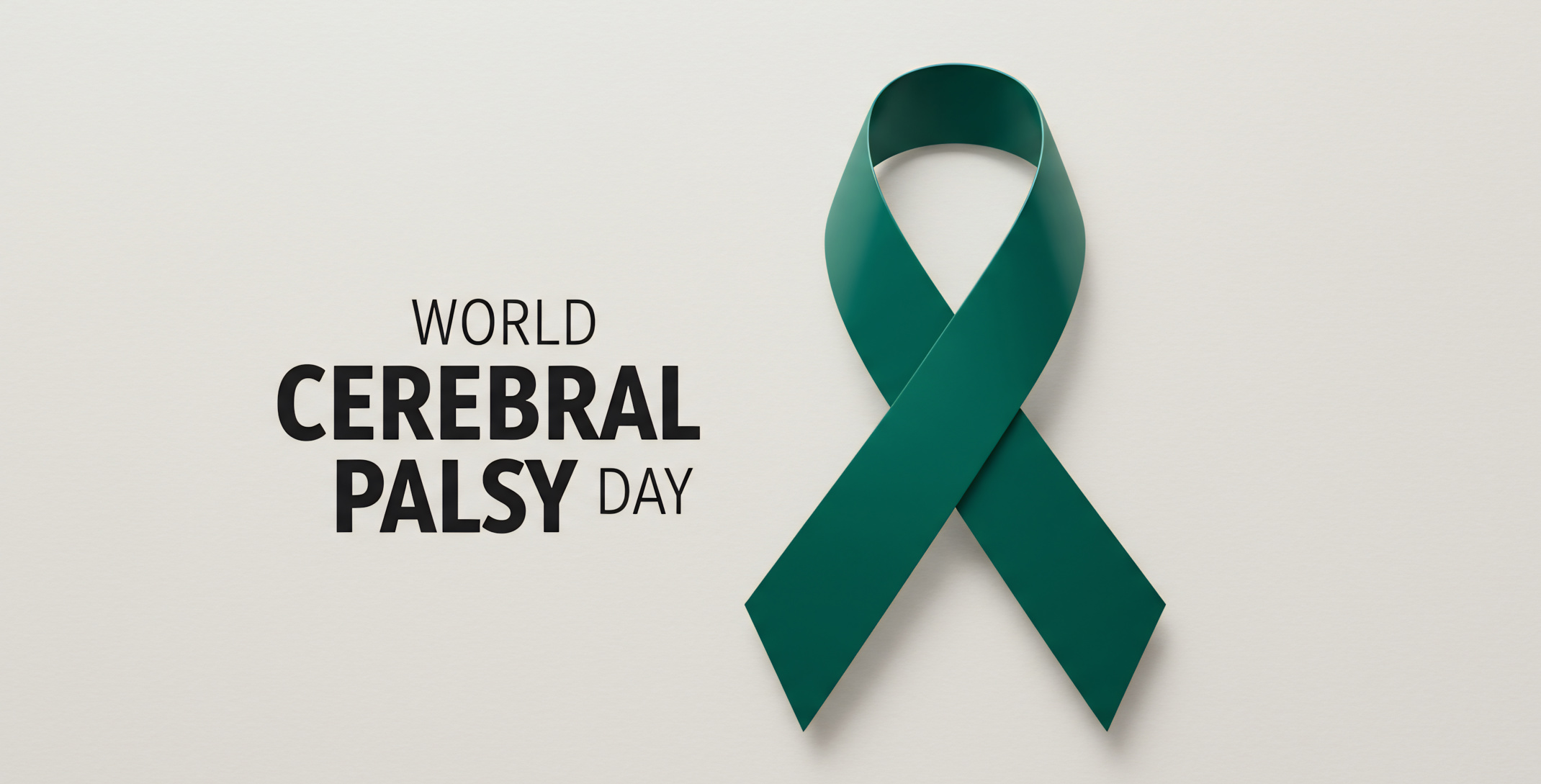
Monday 6th October 2025 is World Cerebral Palsy Day – a global awareness day that highlights the challenges faced by people living with cerebral palsy and their families. Cerebral palsy is the most common lifelong physical disability, and World Cerebral Palsy Day is an important opportunity to recognise achievements, raise awareness, and push for a more inclusive society1.
At Tree of Hope, we’ve supported over 600 children with cerebral palsy in the UK, helping families to fundraise for vital therapies, surgeries, equipment, and home adaptations when NHS support is limited. Every child’s journey with cerebral palsy is unique, and fundraising often becomes a lifeline for families who need access to specialist treatment.
What is Cerebral Palsy?
Cerebral palsy (CP) is a lifelong condition that affects movement and coordination due to a problem with the brain that occurs before, during, or shortly after birth. The impact varies widely between individuals: while some people may have mild mobility issues, others may have more complex needs requiring lifelong care and specialist support2.
There are five main types of cerebral palsy3:
- Spastic cerebral palsy (the most common)
- Ataxic cerebral palsy
- Athetoid (dyskinetic) cerebral palsy
- Hypotonic cerebral palsy
- Mixed cerebral palsy
👉 Learn more about the types of cerebral palsy here.
Symptoms of Cerebral Palsy
Cerebral palsy symptoms aren’t always obvious at birth. They often become noticeable as a child develops and misses key developmental milestones. Some early signs of cerebral palsy include:
- Not sitting by 8 months or not walking by 18 months
- Stiff, weak, or floppy muscles
- Jerky, uncontrolled, or clumsy movement
- Walking on tiptoes
- Difficulties with swallowing, vision, or speech
If you are concerned about your child’s development, it is important to speak to a healthcare professional for assessment and support.
Treatments and Support for Cerebral Palsy
Although there is currently no cure for cerebral palsy, there are many treatments, therapies, and pieces of equipment that can dramatically improve a child’s quality of life and independence.
Common treatments and support options:
- Therapies: physiotherapy, occupational therapy, speech and language therapy, hydrotherapy, and hippotherapy can all support movement, communication, and strength.
- Specialist equipment: such as wheelchairs, walkers, adaptive seating, orthotics, or hoists to improve mobility and comfort.
- Communication devices: including tablets or communication boards to help children express themselves.
- Medical treatments or surgery: including SDR (Selective Dorsal Rhizotomy) surgery to reduce spasticity, or botox injections to help manage muscle stiffness.
At Tree of Hope, we often see families fundraising for these life-changing therapies and equipment, which are not always fully funded by the NHS.
Family Spotlight: Living with Cerebral Palsy
On World Cerebral Palsy Day, we want to shine a spotlight on families across the UK.
We recently spoke with Sarah, Kim, and Ayesha, parents of Willow, Harry, and Harrison, who all have cerebral palsy and are currently fundraising with Tree of Hope. For each family, fundraising has provided access to specialist medical care, therapies, and equipment that make a real difference to their children’s independence and daily lives.
How does Cerebral Palsy affect your child on a day-to-day basis?
Sarah, Willow’s mum: “Willow is verbal which is fantastic. She isn't able to walk so she uses a wheelchair most of the time. All four limbs are affected for her, so she can't self-propel that wheelchair at the moment, although we do have a motorised chair with specially adapted buttons and she's now beginning to learn to drive for herself for the first time.”
Kim, Harry’s mum: “It mainly affects his right hand, so just the simple things like getting dressed, putting shoes on, putting his jacket on and off, he can't do that. Carrying his bag into school, he can't really do that, or he really struggles. He's only in primary school so his bag isn't that heavy but for him it's one of the things that he really struggles with.”
Ayesha, Harrison’s mum: “Harrison has cerebral palsy, left sided hemiplegia. It's the right side of his brain, so it affects the left side of his body, so he has a weakness all down his left side. When he was much younger, he wasn't able to walk or get around independently, but through sheer determination and perseverance, he now doesn't stop running around and he's on the go constantly, but that left side does tend to drag, so he can fall over a lot. He also has difficulty with spatial awareness.”
Are there any particular challenges that your child has overcome that you’re particularly proud of?
Sarah: “At age two, she was pretty much nonverbal and we weren't sure whether she was going to be able to talk or not. Our fundraising campaign is called Get Willow Walking and 18 months ago we were able to go to SwimLab which is a facility in Lanzarote which concentrates on aquatic therapy and what she was able to do there was move all four limbs independently for the first time. What she's managed to achieve because of the therapy she's received is going from a non-verbal, not able to move two-year-old to a seven-year-old that now is the most chatty, sociable girl in school and maybe even our town. She's like a minor celebrity!”
Kim: “Everything that he's achieved. We didn't think at first that he would be able to talk because we didn't know how bad his condition affected him, where now we can't shut him up, he's always shouting or singing or doing something! Also, they said like he might not be able to use his ‘helping hand’, but slowly he is starting to do it and we're trying to get him to a specialist centre in Manchester that works especially in CIMT (Constraint-Induced Movement Therapy) for Harry's hand. But every day I'm so proud of him and he's just the fact that he's just getting on with life and not letting his condition stop him really.”
Ayesha: “Just everything! His sheer determination - if he wants to do something there is no stopping him. Physically, the thing I'm proudest of in the last couple of years is that he's learned to ride a adapted bike. It has a handle at the back so that I can guide it and at first he couldn't pedal it independently, whereas now he's zooming off down woodland pathways and it's given him so much confidence and more freedom. So, I'm really proud of him for persevering and being able to do that.”
How can we as a society make life easier for someone with Cerebral Palsy?
Sarah: “I think the little things make a huge difference to me. Automated doors are the most huge help, especially at the moment, because we're propelling Willow along in a wheelchair. I went to Plymouth last year and there's a shopping centre there and all the doors were very difficult to open, we're not local. Everybody opened doors for us wherever we went. It's the kindest thing in the world. So it's not just down those public spaces making themselves more accessible, that's part of it, but just the kindness of strangers. It made a huge deal to me and I had a great day because of it.”
Kim: “Just to be more open with things, like realising how the condition can affect people in different ways. It's a condition that can affect the whole body, where not many people understand it or how it can affect your day-to-day life.”
Ayesha: “Access is a huge issue. People need to understand that putting a disabled toilet in doesn't necessarily just make something more accessible. Sometimes you need places where you can lie the children down, you need changing places. Also, people need to understand that there's nothing to fear for these children. Often the amount of pitying looks we'll get or people saying unkind comments or staring and like the judgment, and you just think actually just come over and have a chat. If your child wants to say something, don't tell them to stop staring. Let them come over and ask questions because that's how children learn. That's how people learn. And they'll just realise that there's nothing to be afraid of.”
How Tree of Hope Supports Families with Cerebral Palsy
Tree of Hope is the UK’s leading children’s charity helping families of children with disabilities, including cerebral palsy, to fundraise for the medical treatment and equipment they need. We provide:
- A trusted fundraising platform with charitable status
- Gift Aid on donations to boost funds
- Guidance and support for families throughout their fundraising journey
If you are a family in the UK seeking cerebral palsy fundraising support, or you want to learn more about how to help children living with cerebral palsy, get in touch with us today.
You can watch our interview with Sarah, Kim and Ayesha in full below, or support Willow, Harry and Harrison by clicking below:
Get Willow Walking
Giving Harry a Helping Hand
Music Therapy for Harrison
To learn more about Cerebral Palsy, take a look at Action Cerebral Palsy https://actioncp.org/ or Scope https://www.scope.org.uk/advice-and-support/cerebral-palsy-introduction
2 https://www.nhs.uk/conditions/cerebral-palsy/
3 https://www.cerebralpalsyguide.com/cerebral-palsy/types/