Blog
Healthcare Spotlight: SMA Awareness Month – The Importance of Early Diagnosis of SMA
20 Aug 2025

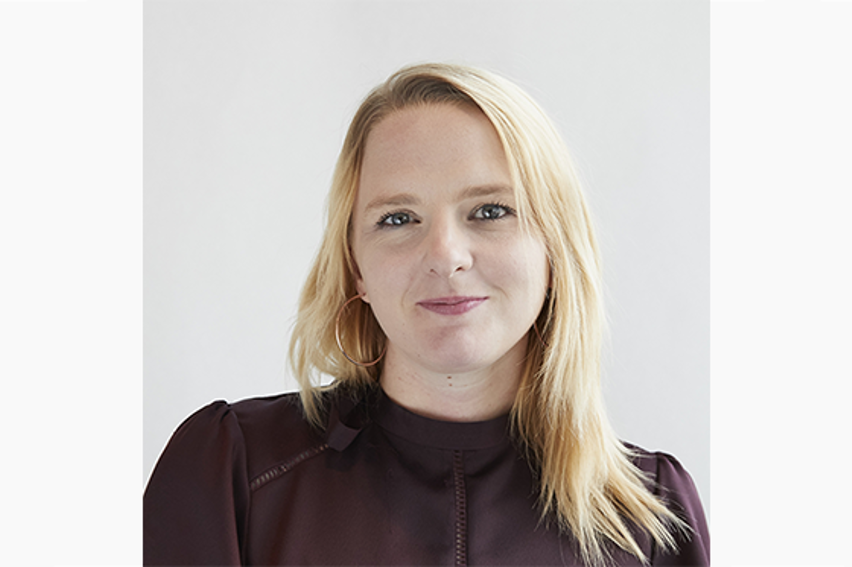
August is Spinal Muscular Atrophy (SMA) Awareness Month, and in support of this, we spoke with Portia Thorman, Head of Advocacy and Community at SMA UK, a charity dedicated to supporting, informing, and advocating for people affected by this rare neuromuscular condition.
Our focus: the importance of early diagnosis of SMA, and how newborn screening can lead to better health outcomes and access to life-changing treatments.
Advocating for People with Spinal Muscular Atrophy (SMA)
Portia Thorman joined SMA UK as Advocacy Lead in 2022. She works to improve access to SMA treatments, therapies, and coordinated care, while also campaigning for vital health policy changes, including the inclusion of SMA in the UK’s newborn screening programme.
She highlights the broader issues her role tackles: “I work on the bigger issues that impact the wider SMA community – access to coordinated care, newborn screening, rewriting standards of care for SMA, and being a delegate for SMA Europe.”
What Is Spinal Muscular Atrophy (SMA)?
Spinal Muscular Atrophy (SMA) is a rare genetic condition that causes progressive muscle weakness due to the loss of motor neurons. People with SMA are missing a key protein – survival motor neuron (SMN) protein – which is vital for muscle control.
“There’s nothing actually wrong with the muscles themselves,” Portia explains. “They’re not receiving messages from the brain, so they’re not in use – and that causes them to waste away. That’s called atrophy.”
Types of SMA Explained
There are different types of SMA, each defined by age of onset and severity:
- Type 0: Extremely rare; symptoms begin in the womb.
- Type 1: The most common type (around 60% of cases1). Symptoms appear before 6 months old. Babies may have muscle weakness, difficulty with head control, swallowing, breathing, and may require ventilation and feeding support.
- Type 2: Onset between one year old and three-years old. Children who may have previously been able to crawl or take some steps may lose mobility over time.
- Type 3: Typically appears after three-years old. Children may walk initially but lose strength and mobility gradually.
- Type 4: Adult-onset; very rare.
SMA Treatment Options: What’s Available Today?
Although there is no cure for SMA, treatment advances over the past decade have significantly improved the prognosis and quality of life for many.
Portia shares her son Ezra’s story: “He was born in 2016 – before any treatment for SMA was available. We were told to take him home and love him because there's nothing that can be done. But his specialist neurologist said to us, there is a treatment that's just become available in America. We were lucky enough to get that, and my son got his first dose of Spinraza treatment when he was six months old. Now eight, Ezra continues to have Spinraza treatment three times a year, which is injected into his intrathecal space in his spine”
Approved SMA Treatments in the UK Include:
- Spinraza (Nusinersen) – Intrathecal injection every 4 months to increase SMN protein production.4
- Risdiplam – Daily oral medication for increasing SMN protein levels.
- Zolgensma – A one-time gene therapy, delivering a functional copy of the SMN1 gene. Known as the world’s most expensive drug, it is now funded by the NHS.
Why Early Diagnosis of SMA Is Life-Changing
SMA progresses before many symptoms are noticed, but early diagnosis through newborn screening allows for treatment before irreversible damage is done.
Common early signs of SMA include:
- Weak muscle tone (floppy limbs, poor head control)
- Difficulty swallowing or breathing (often relying on stomach muscles rather than the disphragm)
- Mobility problems, such as difficulty sitting, walking or crawling
- Muscle twitching or shaking
- Weak cough reflex
- Bone or joint issues (such as Scoliosis)
Even with treatment, SMA causes permanent damage if not addressed early – highlighting the urgent need for newborn screening.
Newborn Screening for SMA: The UK Campaign
Despite global progress, the UK has yet to fully implement newborn screening for SMA.
Portia explains: “It’s incredibly frustrating trying to explain to the committee that it’s not ethical not to screen for SMA, especially when early intervention saves lives.”
Current Challenges in SMA Screening:
- The UK National Screening Committee (UK NSC) previously declined to add SMA to the screening programme back in 2018, citing insufficient UK-based data.2 A re-review can only be considered after a further 6 years has passed
- SMA affects roughly 1 in 10,000 babies1, but limited data collection and UK-only studies have slowed progress.
- The formation of a new government last year meant that allocation of funds via the National Institute for Health and Care Research (NIHR) was delayed, and the recruitment of a research team means that it is unlikely to see any newborn screening before 2027.
In 2023, the UK NSC commissioned the School of Health and Related Research to conduct an independent modelling study related to screening for SMA, and also an in-service evaluation, similar to a pilot study, to analyse the evidence. However, the in-service evaluation will only be rolled out across 60% of the country, which, as Portia explained to us is due to the fact that “the machine that they need to test for SMA is only in 60% of the labs”. Portia works closely with the Newborn Screening Alliance, including charities, clinicians, and researchers, to fight for equitable screening for 100% of babies born in the UK, regardless of postcode.
The Cost of Delayed Diagnosis: A Financial and Emotional Toll
Delaying an SMA diagnosis doesn't only affect health outcomes – it increases long-term healthcare costs dramatically.
Portia explains: “My son has 12-hour overnight nursing care, costing £25 per hour, 365 days a year. That’s just one part of the cost.”
While the NHS covers medical treatments like Spinraza and Zolgensma, many families face out-of-pocket expenses for equipment, home adaptations, and therapies.
Additional Support Often Needed Includes:
- Physiotherapy: exercising, co-ordination and stretching practice helps to maintain strength and reduce muscle and joint stiffness
- Hydrotherapy – often used to complete physical therapy which may be too difficult on land. The viscosity of the water allows the body time and freedom to move, and the buoyancy reduces the gravitational impact on the body3
- Mobility and medical equipment – powerchairs, ventilators, cough assist machines, and standing frames to help with bone density
- Home adaptations – profiling beds, accessible bathrooms, hoists, ramps
Charities Supporting Children with SMA: Tree of Hope and SMA UK
Tree of Hope helps families safely and securely fundraise for medical equipment, therapies, and adaptations not available on the NHS. You can find more information on the types of healthcare related support that Tree of Hope can help you fundraise for by clicking here:
https://www.treeofhope.org.uk/support-for-parents/what-can-i-fundraise-for/
SMA UK provides:
- Practical support – Letter-writing for EHCPs, insurance help, and more
- Emotional support – For newly diagnosed families and ongoing care
- Peer support groups – Via WhatsApp, virtual meetups, and community events
- Free toy packs – For sensory development in newly diagnosed children
- Educational tools – Including Our Smart World, a children’s book that helps siblings and classmates understand life with SMA
If you or someone you know needs support with SMA, visit SMA UK here https://smauk.org.uk/
The Future of SMA Care Starts with Early Diagnosis
The journey toward universal newborn screening for Spinal Muscular Atrophy in the UK is ongoing – but the evidence is clear: early diagnosis of SMA saves lives and drastically improves outcomes.
With continued advocacy from SMA UK, families, and the broader medical community, we hope to see SMA included in newborn screening by 2027 – so that no child misses the chance at early intervention.